|
Searching
for Mrs. Loshadkina in the
Volga
and Don regions
In
late summer 1916 Czar
Nicolai II received a report by two Russian air force pilots concerning
the sighting of biblical
Noah’s
Ark
on mount Ararat, which at the time was in the Armenian territory. The
Czar was very impressed and interested
at the report and decided to send to the Mountain two groups of
selected men, between the end of 1916 and early 1917, with the purpose
to find the wreckage, to recover samples
and to take photographs. The expedition turned out well despite the loss
of many human life because of many difficulties such as hard climb,
climatic conditions, landslides, etc,
moreover those who were of noble origin
perished first because were not trained to suffer hard conditions
as on the contrary were the soldiers. Unfortunately the Bolshevik
revolution broke out exactly that time, and the opponents of the Czar
regime caused all the members of the expedition to be decimated,
furthermore they covered up the report, and the whole documentation
was made to disappear. The
idea of the atheistic Bolshevicks was to cancel any evidence in favour
of Christian faith and the proof collected by the expedition on Ararat
would have put them into an awkward position. Very few survived that
massacre and among those who did was Batov Fedor Frolovich born on1895,
Galina Batov Loshadkina’s grandfather.
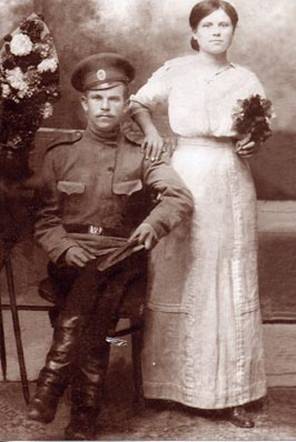
Batov
Fedor Frolovich and his wife Maria Vassilievna
during
the wedding in Tiblisi in 1917
 In
1994 after the fall of the communist regime, the whole story was at long
last published in Russian territory by the Muscovite newspaper
"Science and Religion" which drew the story from an article
appeared over 50 years earlier in the United States by the New
Eden Magazine (1939). In
1994 after the fall of the communist regime, the whole story was at long
last published in Russian territory by the Muscovite newspaper
"Science and Religion" which drew the story from an article
appeared over 50 years earlier in the United States by the New
Eden Magazine (1939).
In
the
USA
the 1939 article was written by Roscovitsky one of the two Russian
pilots who sighted Noah’s
Ark
in 1916. That pilot later had moved to
Usa
becoming a Christian preacher. The 1939 article told the whole story of
the Czar’s expedition and of the two Russian air force pilots.
In
1945 the
New York
branch of "Rosseya" a White Russia newspaper published another
article written by the colonel Alexander Koor former commander of the 19°
Petropavlosky Russian regiment, quartered close to
Mount Ararat
in 1915-
1916. In
his article colonel Koor confirmed the Czar’s expedition major event.
Yet,
in the article published in 1994
by Muscovite newspaper, the editorial staff maintained they could not
confirm the truthfulness of the story.
Galina
Loshadkina after having read the 1994 article
immediately decided to write an convincing letter to the
newspaper editing staff stating
to have full right to confirm the reported story to be true because her
grandfather Fedor had been a member of the Czar expedition and had told
her the whole adventure. How he saw and touched the ark, spotted on the
Mount Ararat
(in 1994 belonging to Turkish territory).
Loshadkina
in her letter quoted Serafimovich the
village in the
Volgograd
region where her grandfather lived and inhabited. The Muscovite
newspaper published entirely her letter of reply.
A
Russian gentleman, Mr. Nicolay, after having visited our
website www.noahsark.it
sent me the whole article in Russian language. My wife Paola who
knows well that language read it to me and both were touched by the
story. Reading that article written in its original language confirmed
once more us that the ancient biblical
Ark
rests on
Mount Ararat
.
Then
we decided to track down Mrs Loshadkina applying to a
Moscow
TV station. But we soon
understood that the best thing to do was to go in the same place and to
ask information at Serafimovich city hall the small village where Mrs.
Loshadkina’s grandfather had lived. Not being able to leave my work my
wife with a certain determination and courage decided to go alone.
At first my wife
decided to get information in
Volgograd
city but it was soon clear that in spite of the Russian Empire downfall
since than politically nothing had changed. To have just simple private
information she would face common bureaucratic delays. Having grown up
in an ex
Soviet
Republic
my wife knew by experience the red tape.
She decided anyway to spend some days in
Volgograd
. Ironically the
receptionist at the hotel where she stayed came from the small
Serafimovich village. She told my wife not only to have heard about
Batov family but also that one of the
family was a teacher at the local school. Providentially things
were going the right way.
Afterwards
Paola took a bus directed to Serafimovich almost
300 kilometres
far across the steppe. As
soon as she arrived she went to the city hall meeting the right lady at
the right moment. That lady’s teacher when she was a little girl was
Batov Fedor Folovich’son, namely Alexei Batov. That kind lady asked a
driver to take my wife to an old Batov’s relative home.
There
my wife met an eighty year-old courteous lady who kindly welcome my wife
and informed her that Mrs. Loshadkina had moved to a little village
100 kilometres
west of Serafimovich, in the
Rostov
region. The old lady immediately called her daughter and
asked her to drive my wife to Mrs. Loshadkina home. Her daughter
initially was a bit reluctant and hesitated at the idea to travel
100 kilometres
but her mother insisted in an almost providential way. She had probably
understood that the meeting was very significant. The old lady’s
daughter, her husband and my wife left by car and drove 100
kilometres in the middle of the widest steppe. Finally
they reached Galina Loshadkina home. The lady at that unexpected visit
was amazed and satisfied as
well. She was amazed that an
Italian lady had travelled from
Italy
to meet her, just to get direct evidence of his grandfather experience
with Noahs’Ark and all this after a 17 years
silence since the article appeared in a Muscovite newspaper, in 1994. My
wife Paola, and her fellow travellers, were welcomed as special guests,
were offered supper and pleasantly
entertained in conversation about Loshadkina’s grandfather experience.
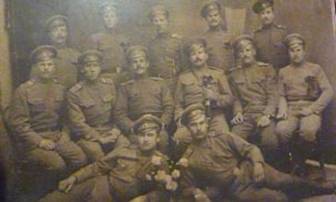 Mrs.
Loshadkina told my wife that after the experience on
Mount Ararat
her grandfather’s life had changed a lot. He had been in constant
danger owing to the Bolshevik’s intention to exterminate the people
taking part in the Czar’s expedition. To such an extent that to talk
about "Noah’s
Ark
on
Mount Ararat
" became a taboo subject to whomever. Mrs.
Loshadkina told my wife that after the experience on
Mount Ararat
her grandfather’s life had changed a lot. He had been in constant
danger owing to the Bolshevik’s intention to exterminate the people
taking part in the Czar’s expedition. To such an extent that to talk
about "Noah’s
Ark
on
Mount Ararat
" became a taboo subject to whomever.
Furthermore
he was deeply touched by the death of many companions in climbing the
Mountain and both on the way up and down.
Grandfather told that the Czar sent up the mountain
selected and faultless men especially from the spiritual point of
view. Grandfather Fedor was married according to the couple parents’
customs that were in use at the time, but to be allowed to take part of
the expedition he was invited and obliged to attend a new wedding
ceremony according to the Christian-Orthodox
rite in a Tiblisi church. This explains the deep religious spirit
that urged the Czar to
organize the expedition on Ararat.
Fedor
later on, entered a four
years religion class which went against communist principles, for this
reason he was accused of betraying his country and was exiled to forced
works for three years between 1931 and the 1933 making Bielomorkanal, a
canal
227 kilometres
long connecting Baltic sea to
White sea
.Fedor who had taken part in the first world conflict, for patriotism
had to take up arms again to defend his country in the second one...! In
his life he used to be a baker so during the two wars he carried on with
his craft.
When
she was a child in the 60’s Galina attended the school and one day her
teacher during the lesson spoke about the Ararat mountain, its history,
and that once it was in
Armenian
Republic
territory. Back home from school Loshadkina told her grandfather what
she had learned from her teacher about Ararat.It was in that occasion
that he told his grand-daughter in confidence about his experience on
that mountain. He told her to have reached the
Ark
with many efforts in a very impervious place, and to have entered inside
the
Ark.
He and his group were not the first to get there because visible traces
were left by other people (probably Armenian shepherds). He said
that it took two-three men to embrace a main beam inside of the ark.
From the analysis of wood
samples collected it resulted to be Oleander. Furthermore he told her
that under the
Ark
a small glacial pond had formed and drinking that very cold water coming
from the pond he claimed made him to feel strong.
The following days with a great enthusiasm the little girl Galina
reported her teacher her grandfather’s story, but the teacher
admonished her not to tell it anymore to anybody, otherwise her
grandfather’s life would be in danger.
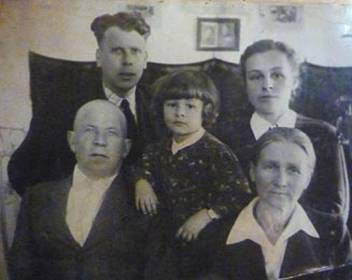
Family Batov. In the left down Fedor in the centre the
lady
Galina Batov now Loshadkina. 1954 photo
 My wife during the
interview told Loshadkina that a French explorer had found a
piece of wood on Ararat and that we also possessed a very hard
partially petrified small piece. This detail recalled the lady
what had happened, when she was a little girl. She told my wife that one
day at her grandparents home, she noted in a dark corner a chest guarded
with a lot of care. Out of curiosity she opened that sort of mysterious
box and inside, among a lot of her grandfather’s personal things, she
saw a piece of hard wood like a stone. She asked her grandmother to be
allowed to throw away that kind of old stone but her grandmother
suddenly reacted brusquely warning the child absolutely not to touch it
anymore! My wife during the
interview told Loshadkina that a French explorer had found a
piece of wood on Ararat and that we also possessed a very hard
partially petrified small piece. This detail recalled the lady
what had happened, when she was a little girl. She told my wife that one
day at her grandparents home, she noted in a dark corner a chest guarded
with a lot of care. Out of curiosity she opened that sort of mysterious
box and inside, among a lot of her grandfather’s personal things, she
saw a piece of hard wood like a stone. She asked her grandmother to be
allowed to throw away that kind of old stone but her grandmother
suddenly reacted brusquely warning the child absolutely not to touch it
anymore!
Now 50 years later Mrs. Loshadkina understood
the reasons of her grandmother’s rough reaction and what was the piece
of rock she had found in the old chest. It was nothing else but a piece
of wood taken from Noah’s
Ark
that her grandfather collected during the Czar expedition and jealously
guarded it in a safe chest.
Unfortunately the grandparents’ house was sold and the box
remained inside, now nobody knows what had happened to it. Also
her grandfather's sketches had been lost in many removals. Grandfather
first and grandmother later, suffered from ictus with facial paralysis.
Both of them before dying wished to tell their offspring something
really important but they could not owing to the paralysing disease.Most
probably it was about the content of the chest or of about something
hidden somewhere in the
house. Unfortunately it was custom at the time to keep
secrets to be revealed only at
the death-bed. Grandfather
died in 1969 and grandmother 10 years later.
Galina
Loshadkina with the newspaper of the article about
Ark

After
a beautiful and exciting conversation Mrs. Galina told my wife Paola
that her visit and the subject discussed had deeply touched
her heart! Furthermore Mrs. Galina gave my wife a picture of
her grandfather and she
promised to write down anything she could recall and that she would try
to track down an acquaintance of her now living in the Caucasian city
Krasnodar, who might know facts and events related to Noah’s Ark
story.
She
told me in confidence that all these years she had wished to get in
touch with that acquaintance but she had not, probably for lack of a
specific incentive. As soon as Galina
will give us the telephone number we
will try to get in touch with that person to have, if possible, more
evidence.
Paola gave Galina some pictures of mine taken on Ararat one of
which near the
lake
of
Kop
. Looking at it the lady said that her grandfather too had crossed that
lake. Then my wife said goodbye to her guests thanking them for their
warm welcome and together with the couple of friends went back to
Serafimovich where she stopped overnight. The next day by bus she
travelled to Volgograd she stayed a couple of days in Moscow to call on
the editorial staff of "Science and Religion" newspaper to
have, if possible, more information, but she did not find the same warm
welcome. She was given nothing else but a copy of the same Russian
article we already had.
Roberto Tiso
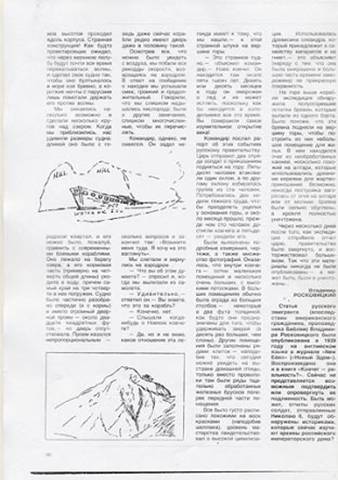
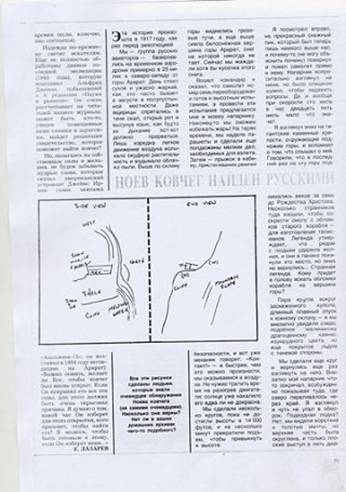
Russian original
article of Science and Religion of the 1994 copy N° 1
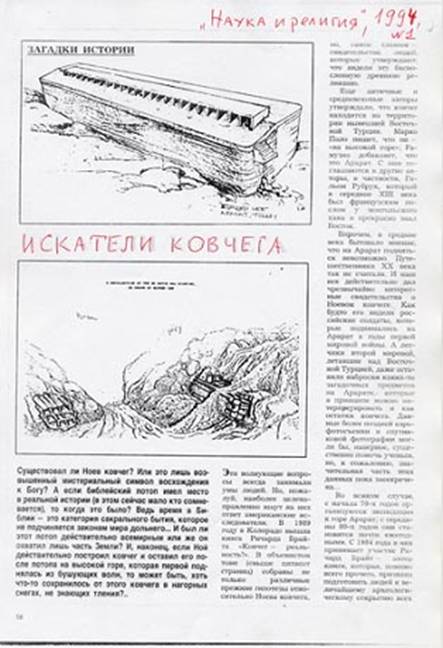
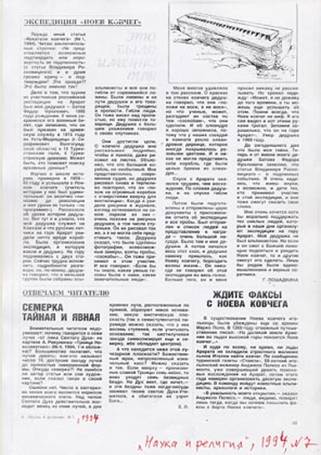
Answer of the Mrs
Loshadkina published of Science and Religion to the 1994 N°7
Translation of the
article of Science and Religion 1994 N°1 and N° 7
In August 1916 the royal family, and
Russia
were given an amazing sign of the terrible times to come, certainly the
most amazing sign from heaven, ever imagined. It is not easy to
understand the essence of that sign, but surely once again a great
miracle originated from it.
Both before and after those days (and up to now) many expeditions have
been arranged with the specific purpose to look for Noah's
Ark
on Ararat. Yet only those who climbed the Mountain with a different
purpose came across the Ark. Strangely expeditions which eagerly
attempted to find it have all been doomed to failure. It has never
occurred that so many persons reached the
Ark
and documented it in such a complete manner as did the task force
ordered by the Czar.
It is also unbelievable that the whole material and the evidences
collected by a variety of witnesses on many occasions always got lost
and almost nothing has been handed down to posterity. The Armenia Summer
of 1916 had been very hot. That year glaciers on Ararat retreated as
never before.In
1939 a
Russian military pilot Vladimir Roscovitsky,
when he was an Orthodox preacher in the United States, related
the facts that happened during summer 1916 to the Californian Journal
“New Eden”, The event immediately got a worldwide amazing success (except
for The Soviet Union which did not publish
the Roscovitsky’s account until 1994, when the first number of
the journal "Science and Religion» divulgated a translation into
Russian [38]).
Below, we quote a summary of the article which appeared in The Soviet
Union.
Above the ridges clouds could
be seen, and a little higher the immaculate
peak
of
Mount Ararat
, covered with perpetual snow. Into that insupportable heat
we longed to cool ourselves in that snow. When the Officer
Commanding came in he told us
that the aircraft number seven was set up and ready for high-altitude
tests, so my fellow soldier and I were invited to perform the tests. At
last we could escape that heat! We did not lose time to warm the engine
up because the heat of the sun had turned the plane almost white-hot. We
flew over the area a while until we reached
the altitude of
14,000 feet
and for a short time we kept it to get used to that level..
I looked to my right toward the beautiful snowy peak, which was at that
moment only slightly above us, and for some reason, that I can not
explain, I decided to direct the plane straight toward the peak.The
co-pilot looked at me surprised by my manoeuvre, but the noisy did not
allow him to ask what my intention was. And generally at the speed of
100/120 miles per hour our position would have changed little. Looking
down giant stones seemed to
me like fortresses springing up from the mountain feet, and I recalled
that I had already heard about it.
At that sight I thought back to the ancient legend telling of Pilgrims
that many centuries before Christ used to climb the Mountain to get to
the
Ark
and scrape the pitch which they shaped in amulets.The legend tells also
that many of those Pilgrims never went back because they died on the
Mountain struck by lightning, We flew twice around the snowy dome at the
same level, then we decided to direct the plane straight down
in direction of the mountain southern face.
In that precise moment we saw a lake, looking just like a little
emerald-coloured jewel, but still covered with ice on the shaded side.
We flew again in circle and back to take another look at the lake.
Suddenly my fellow shouted excitedly pointing to the spot where the lake
spilled over the edge. I myself looked and was astonished at what I
saw.What is that? I shouted. A submarine? No. We saw a wooden structure
coloured black made of short thick poles, the upper side was rounded,
and all along the top ran a structure
about
1 meter
(
3 feet
) high.
A strange construction! Which seemed to have been planned to support
enormous shock waves.
It was like a gigantic log made to keep afloat in a stormy sea. The
short and thick poles seemed to have been arranged to resist powerful
waves. It was as long as a house-block and it could be compared to a
modern military ship. A quarter of the structure was submerged in the
lake. The front and the back side of the vessel was partly dismantled.
There was a huge opening of a door - about twenty square feet - but the
door was missing. The opening seemed too large (disproportionate) modern
ships rarely have doors even half of that.
After that unusual air exploration we beat all speed records, flying
back to the airfield trying
to gain some of the time we lost on the mountain"
This was written in 1939 by Vladimir Roskovitsky, a Russian emigrant, in
the article published by the journal «New Eden». He told also that in
response to his exciting and enthusiastic report of the sighting, their
fellow soldiers mocked him
heavily. Only the Officer Commanding his air group did not laugh, on the
contrary he offered to fly together back to the mountain to better
inspect the mysterious object.
When he came again back to the air field he said:
"That strange ship is Noah's
Ark.
It has been there for about
five thousand years and for nine or ten months a year it lies frozen
into the ice and can not be pulled out, it has been into a natural
fridge all that time. You have made the most amazing discovery of the
century!"
After
that, according to Roskovitsky, the Officer Commanding sent a report
about the discovery to
Petrograd
. After reading it, the Emperor sent to Ararat two detachments of
soldiers with orders to ascend the mountain to the place where the
Ark
had been discovered. A hundred men, climbing over deep crags, reached a
rocky crest (ridge) while a fifty other men reached another crest. Six
weeks later the largest group of those men reached the
Ark
, and the small one was only able to observe it in the distance.
Moreover Roskovitsky told the newspaper what follows:
"They (the
group sent by the Czar) made
detailed measurements, drawings and took many photographs.
Inside the
Ark
they saw hundreds of small rooms and
a couple very large with
high ceilings. Everything had been heavily caulked with a substance similar to wax (a
kind of shellac), showing a skilled piece of work thanks to a
civilization who knew the state of the art.
To build the
Ark
had been used oleander wood, which belongs to the family of cypress and
does not rot, which explains its excellent condition, together with the
fact that it was caulked and frozen. A little upwards
men found logs taken from one side the
Ark
partly burnt and shaped in
the form of a shelter.
Inside it they found rough stones, put up in the guise of an altar, just
like in ancient times Jews used to erect to offer sacrifices. Perhaps a
lightning burst into flames that altar and
the shelter: logs were badly charred and the roof was completely
destroyed.
A few days later the Czar
got the expedition’s
report, he and his
government was overthrown by Bolsheviks who took over the
country.nThe new regime did not allow to publish or divulgate the report, the
photos and the whole material collected, moreover it is possible
that everything had been
destroyed ... ".
Thus
Roskovitsky’s article ends. In
1994 a
Russian translation of it had been spread in Soviet Union by the journal
"Science and Religion" 55
years after it had been broadcasted in the
U.S.A.
The Editors of Science and Religion in a short comment to the article,
expressed regret that it was not possible to verify its authenticity.
Shortly after the publication of the editorial the Journal
received a letter [39]. We present it here as published in
1994 in
the n.7 of "Science and
Religion»:
“I have just read the article "Searchers of the ark”
(by Vladimir Roskovitsky) and the way you
have concluded it: "It is not possible to confirm or deny
its authenticity". I can not help raising my voice against this
statement. I have to confirm the report! It's true! Everything happened
exactly like that! I am so sure
of what I am saying because one of the members of the Russian expedition
on
Mount Ararat
was my grandfather Mr. Batov Fedor Frolovich, who was born in 1895.
I still keep his military record, where it is registered his recruitment
in 1915 at Ust-Bear (now Serafimovich Volgograd region) in the
15th Regiment of Turkestan, 4th division of
Turkestan
. Maybe this can help searching for historical data? In 1959-1960 when I
still attended school during history classes, I learned about Noah's
Ark
with my history teacher. She was very special (she had attended high
school before the Bolshevik revolution and used to teach us a lot of
informal lessons).I told my grandfather what I had learned from my
teacher.
It was on that occasion that my grandfather related me the facts
happened at the time he was serving in the Caucasus when Russian pilots
saw something like a ship on
Mount Ararat
. My grandfather was in the
expedition ordered by the Zar. He went on relating the facts. They
climbed the mountain from both sides.
Now it is difficult to remember all the details of the conversation. I
can recall that my grandfather
told me about
the smaller group made up of expert climbers. Unfortunately all
of them perished swept by an enormous avalanche.
My grandfather and his companions too faced avalanches,
deep clefts and crevasses along the track they were walking.
Many of his group perished too. Also my grandfather
ran the risk of falling inside a precipice, fortunately his
companions helped him. My
grandfather told me also about the great
respect prevailing between them. Finally they reached the goal.
My grandfather told me to the smallest detail what they saw, even
drawing sketches. He explained to me
that the
Ark
was enormous and unusual. I
imagined a modern ship, but my grandfather drew it
again and patiently stressed that it looked like a huge box with
openings for ventilation on the top. My grandfather told me
that they had taken many
photos, and made all sorts of measurements, moreover they
collected samples by scraping various sections. He also took part
in all that activity. He did not grow tired of telling me.
"You never know how very clever and smart were the persons of our
group”.
I was very surprised of what he told about
the caulker on the
walls that it looked like wax, but it was not. I think by now
scientists may have discovered the chemical composition of that
substance analyzing the samples scraped away. I well remember about
oleander wood, which the
Ark
was made of, because our
neighbours had grown one of those trees bearing pink flowers.
Descending Ararat was more difficult than climbing. Many others lost
their lives. The detailed
report of the expeditions was sent to the Zar together with the
documents, the samples and a list of the members of the group drawn up
in order to award people with an important
praise by The Zar. The name of my grandfather
was in that list. In
a very short time the
October Revolution broke out plunging The Soviet Union
into chaos and my grandfather had to struggle against a difficult
situation to survive as did the Ark against giant waves.
For fear he never told anybody the story of
the expedition, moreover, he asked me to do the same, still
keeping the hope: "Maybe I will not live up to that time, but you
will hear to talk
about the events I lived on Ararat. Remember always that Noah's
Ark
is not a myth. I saw it myself and these hands touched it. Remember very
well that it is on
Mount Ararat
". Grandfather died in 1969. Until today I kept this
secret inside my heart. Now, on behalf of my grandfather Theodore
Batov Frolovich, I proclaim
that the article by Vladimir Roskovitsky is about a true event happened
for sure.I really want to give moral
support to brave
people who nowadays organize expeditions to
Mount Ararat
.
My grandfather was not a climber. But with God's help he was able
to reach and see
Noah's
Ark
, others people can take his example.
G. Loshadkina. |